
If your feet roll too far inward when you walk or run, you may be overpronating. Overpronation can place additional strain on your feet, ankles and lower legs and may contribute to heel, arch, knee or lower-leg discomfort. The good news is that supportive footwear and custom orthotics may help improve comfort and stability.
What is pronation?
Pronation is a natural movement of the foot and occurs at three points in the walking / running stride. It begins when your heel touches the ground and your ankle rolls inward, allowing your foot to become more flexible and adapt to the terrain. As you transition from your heel to mid-foot, the arch of your foot flattens slightly before returning to its natural position; this is known as pronation. Finally, when you push off from your toes, your ankle rolls outward which is known as supination or under-pronation.
Overpronation is a condition in which the foot rolls excessively inward when walking or running, disrupting the natural motion of the foot. Some degree of over pronation occurs in close to 70% of people, it’s common. If left unchecked, this can lead to discomfort and injuries. Luckily, there are ways to identify over pronation and take steps to fix it.
Signs and symptoms of overpronation
Overpronation can result in various signs and symptoms. These include an exaggerated inward roll of the foot, extend or flattening of the arch, increased wear on the inside of your shoes and lower leg pain. Other signs and symptoms may include an excessive inward turn of your ankle, hip and knee pain, flat feet and shin splints. If you experience any of these symptoms, it’s important to get help on how to prevent and manage overpronation. Custom orthotics can remedy this problem.
These problems can be caused by overpronation
- Heel or arch pain
- Flat feet
- Corns or calluses
- Ankle, knee, hip, or back pain
- Hammer toes
- Shin splints
- Plantar fasciitis and other foot problems
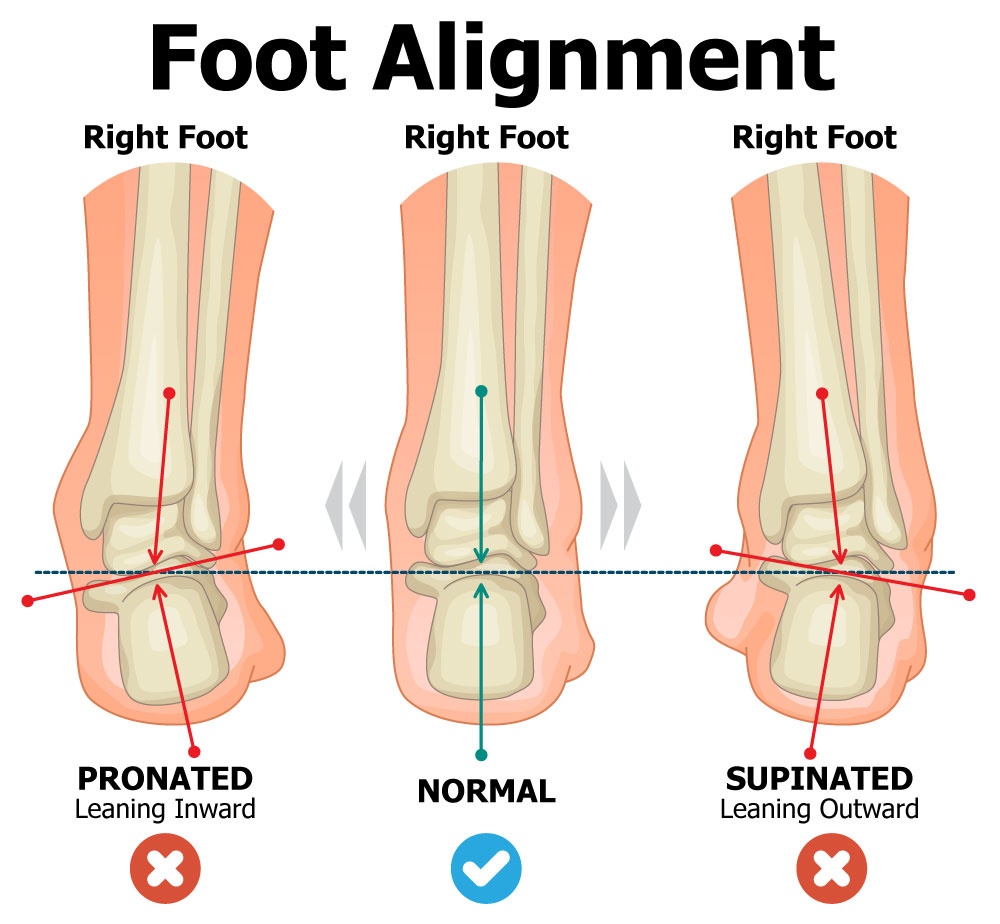
How to test yourself for overpronation or supination
One way to test for overpronation is to wet your foot and stand on a piece of paper. Step off the paper and you’ll see your footprint. Compare your footprint to those shown in the diagram. This will show any areas of your foot that are taking the most pressure and you’ll be able to compare it with the general pattern of a normal foot. Another way is to find out if you have a high or low arch in your feet, (a sign of pronation or supination) is to schedule a free foot evaluation with The FootLab, we’ll determine this for you.
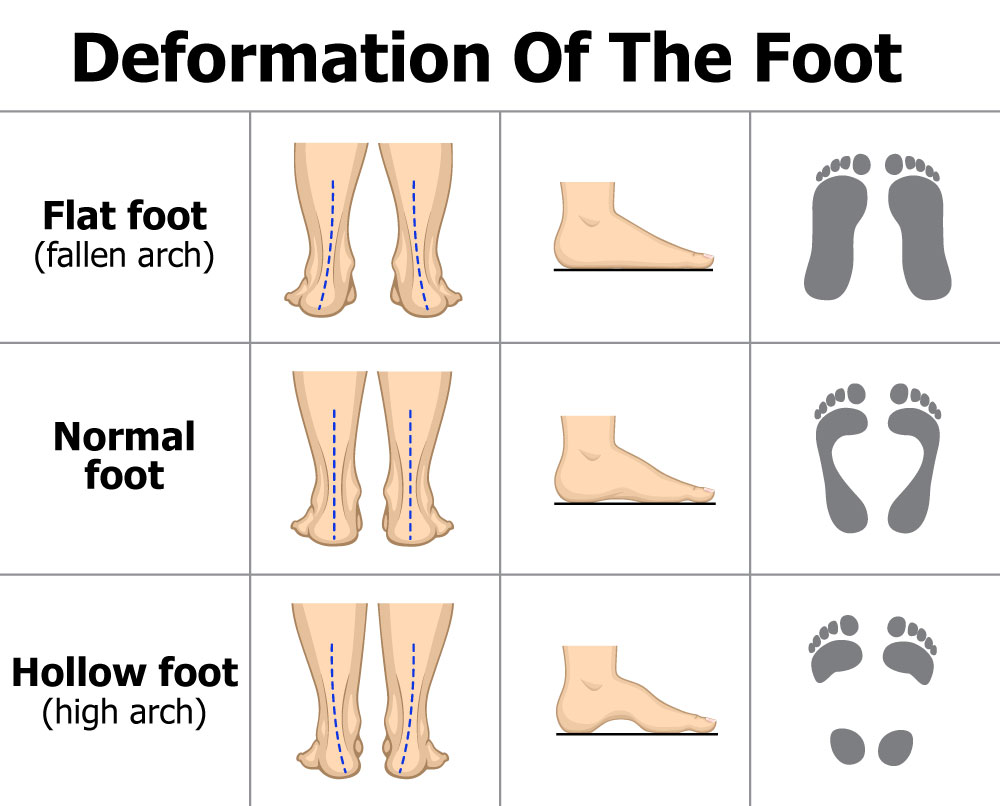
Custom orthotics for overpronation or supination
Wearing appropriate footwear with arch support is very important in providing stability to your lower legs and feet, which can help reduce excessive pronation or supination. Wearing the wrong type of footwear without proper support to correct alignment can cause injury to your feet and legs.
The FootLab difference, what we do
- No prescription needed
- Walking and gait observation, footwear assessment
- Review of symptoms and activities
- Recommendations based on your individual situation
- Custom orthotics fabricated and fit in one hour if you chose
- Free follow-up adjustments if needed
- 100% satisfaction guaranteed
- All work performed by Certified Pedorthists
Are you concerned about overpronation?
You don’t have to guess if arch support is right for you. Schedule a free foot evaluation at The FootLab. We’ll explain completely how custom orthotics will change your foot and body posture to fix problems from overpronation. We’ll listen to your questions and answer them thoroughly. Click the link below to schedule your appointment. Take care of your feet!