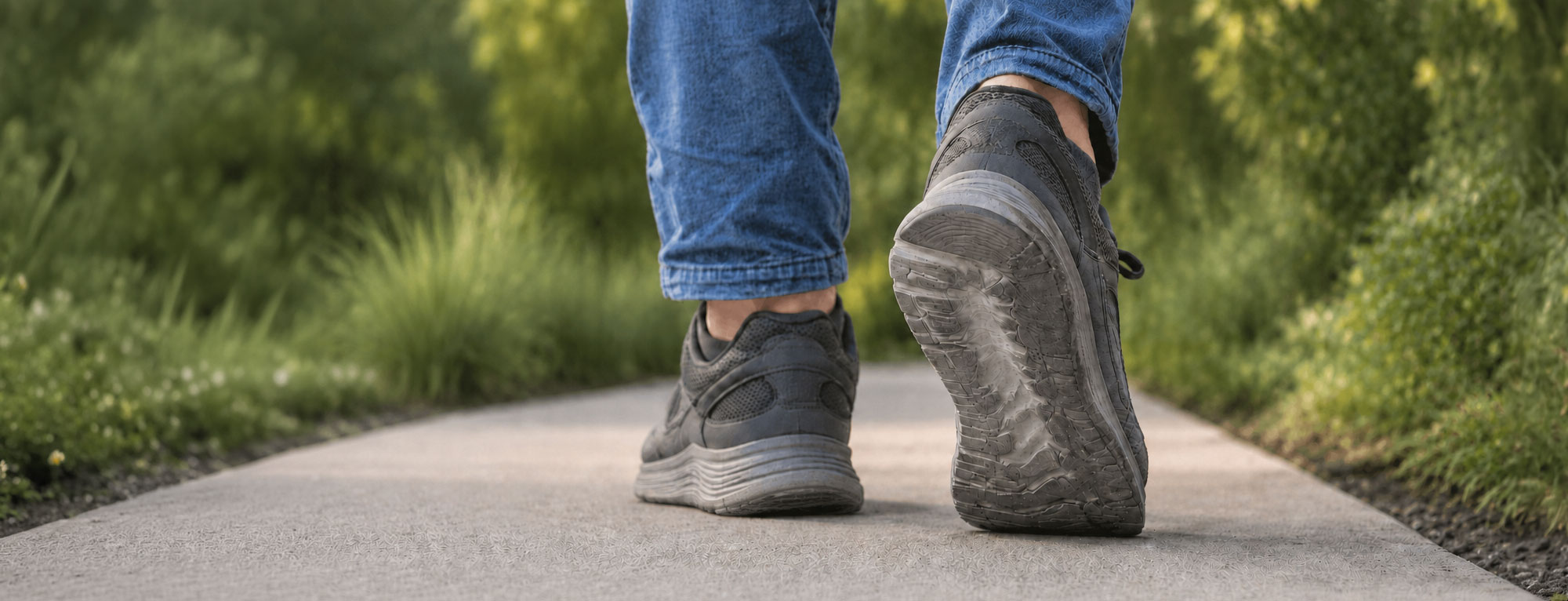
Better support. Improved pressure distribution. More comfort with every step.
High arches may look strong, but they can create painful pressure points and prevent your feet from absorbing shock efficiently. If your feet also roll outward while walking or running—a movement called supination or underpronation—the outside edges of your feet and ankles can absorb more stress than they should.
At The FootLab, our Certified Pedorthists evaluate your feet, footwear and walking gait. We then mold and build custom orthotics specifically for your high arches, pressure patterns and daily activities. Your orthotics are made in our on-site lab, you’ll leave with them in about one hour.
Are High Arches Causing Your Foot Pain?
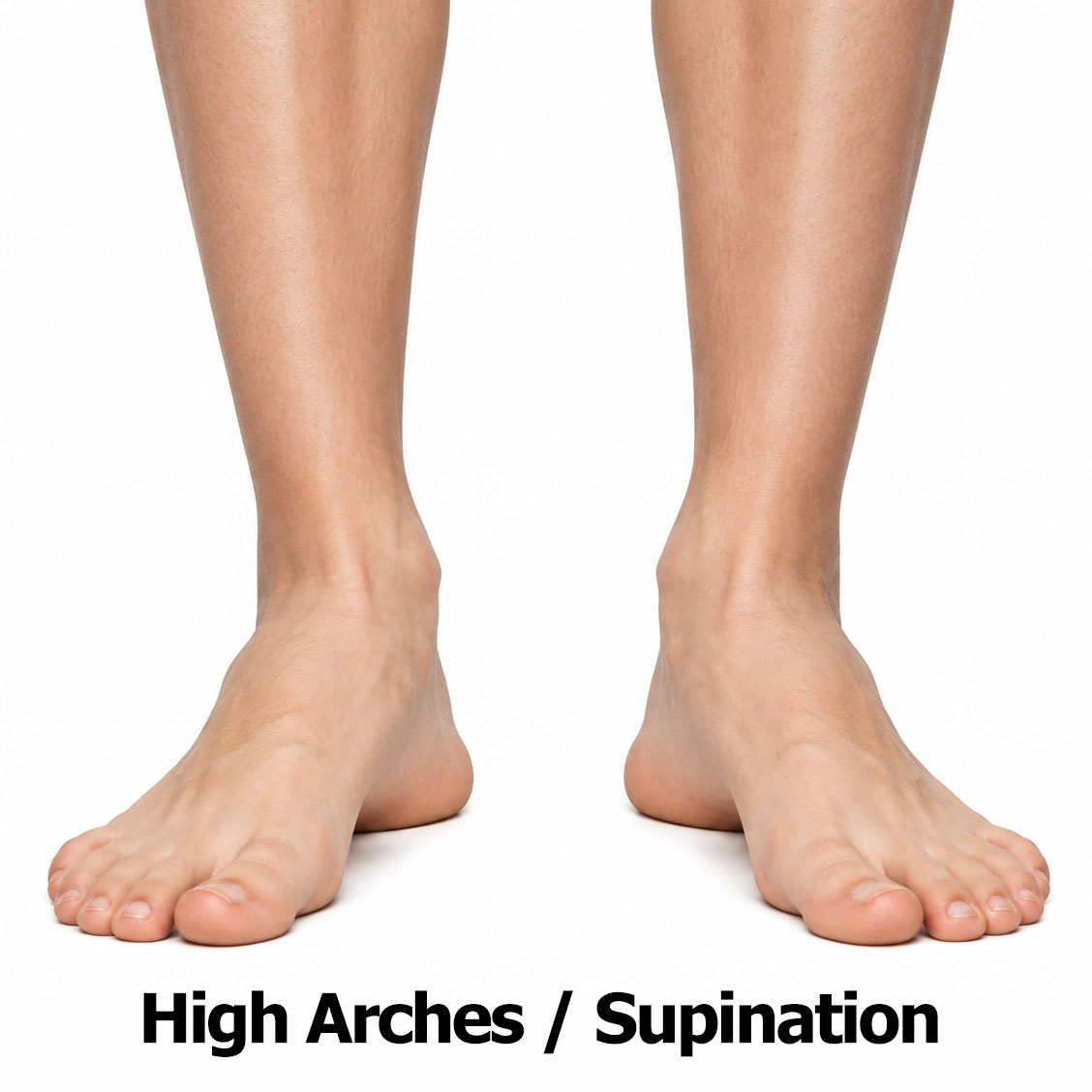
A high-arched foot—sometimes called a cavus foot—places more weight on the heel and ball of the foot. Because less of the midfoot contacts the ground, pressure may not be distributed evenly.
High arches may contribute to:
- Heel pain
- Ball-of-foot pain
- Arch pain or tightness
- Pain along the outside of the foot
- Corns and calluses
- Ankle instability
- Frequent ankle rolling or sprains
- Foot fatigue when standing, walking or running
- Reduced natural shock absorption
Some people have high arches without pain. Others experience discomfort that becomes worse during work, exercise or long periods on their feet.
What Is Supination?
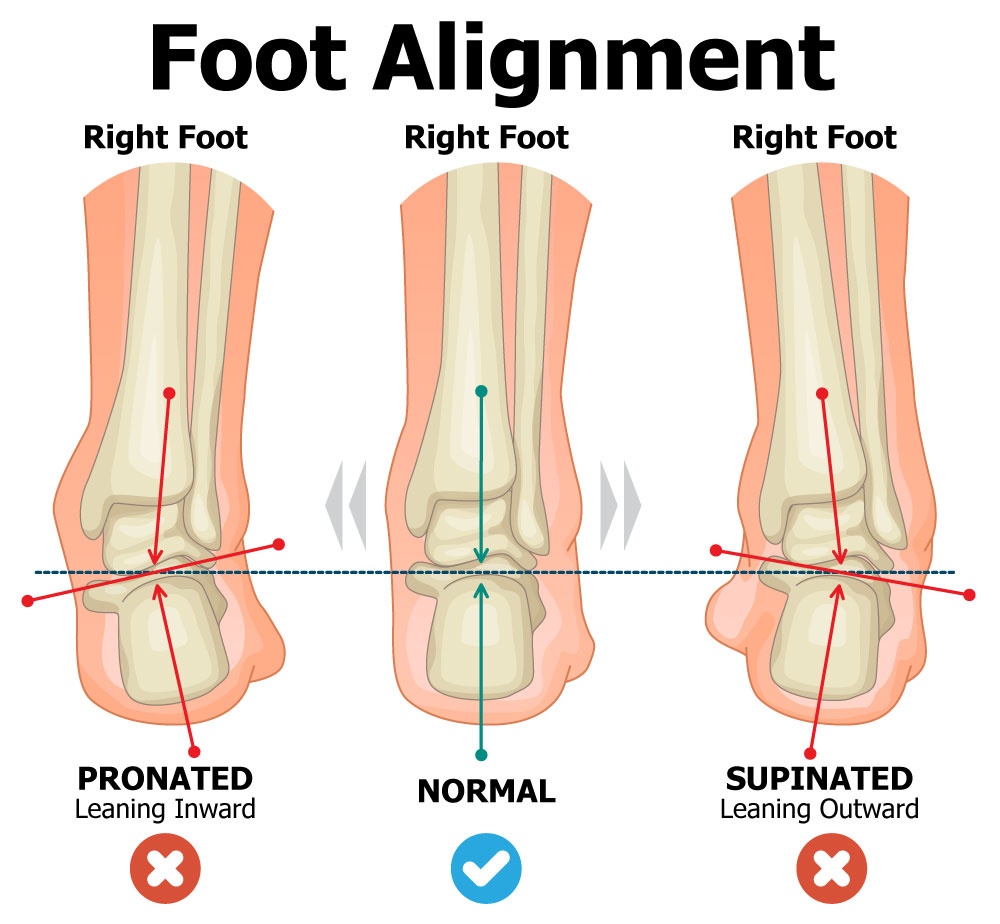
Supination—also known as underpronation—occurs when the foot remains toward its outside edge as you walk or run. Instead of rolling inward enough to help absorb impact, the foot may remain relatively rigid. This can concentrate pressure along the heel and outside of the foot. The additional stress may affect the feet, ankles and lower legs.
Common signs of supination include:
- Shoes that wear down faster along the outside edge
- Pain on the outside of the foot or ankle
- Frequent ankle rolling
- Tight calves
- Heel or arch discomfort
- Calluses under the heel, forefoot or outside of the foot
- Feet that feel rigid when walking or running
High arches and supination often occur together, but they are not the same condition. That is why it is important to evaluate both your foot structure and the way your feet move.
How Custom Orthotics Can Help High Arches and Supination
Custom orthotics are designed to support your individual foot structure and improve how pressure moves across your feet. Depending on your evaluation, your FootLab custom orthotics may be designed to:
- Provide comfortable support beneath high arches
- Distribute pressure more evenly across the foot
- Add cushioning and shock absorption
- Reduce excessive loading along the outside edge
- Improve stability while standing, walking or running
- Help your feet function more efficiently inside your shoes
- Reduce stress placed on overworked muscles and joints
- Improve comfort during work, exercise and everyday activities
Your orthotics will be made for your specific needs, whether you spend the day standing at work, walking for exercise, running, playing sports or simply wanting to move with less discomfort.
Our High-Arch and Supination Evaluation
Your appointment begins with a Certified Pedorthist who takes the time to understand your symptoms, activities and goals.
We listen to you. We discuss where you feel discomfort, when it occurs, what activities make it worse and what you hope to improve.
We evaluate your feet. We examine your arch height, foot shape, alignment, flexibility and areas of increased pressure or callus formation.
We analyze the way you move. Your walking gait helps us see how your feet contact the ground, absorb impact and move through each step.
We look at your footwear. Different shoes create different support and space requirements. We design your orthotics to work with the footwear you use for work, exercise and everyday life.
We make your orthotics on site. Your orthotics are molded and built for your feet by the same Certified Pedorthist who evaluates you. Our on-site fabrication lab allows us to complete the process in about one hour.
We check the fit. Before you leave, we fit the orthotics to your shoes and make any necessary adjustments.
Frequently Asked Questions
Are high arches always a problem? No. Some people have naturally high arches and experience no discomfort. Treatment may be helpful when high arches are associated with pain, concentrated pressure, ankle instability or difficulty walking and exercising comfortably.
Are high arches and supination the same thing? No. High arches describe the structure of the foot. Supination describes how the foot moves and distributes pressure while walking or running. They frequently occur together, but an evaluation is needed to understand what your feet are actually doing.
Can custom orthotics correct supination? Custom orthotics cannot change the underlying shape of your feet, but they can be designed to improve support, pressure distribution, cushioning and stability. Results depend on your foot structure, symptoms and the cause of your supination.
How do I know if I supinate? Wear along the outside edges of your shoes can be a clue, but shoe wear alone cannot confirm your walking pattern. A professional foot and gait evaluation provides a more complete picture.
Will the orthotics fit in my current shoes? We consider your footwear when designing your orthotics. Bring the shoes you wear most often to your appointment so we can evaluate their fit and compatibility.
How long does the appointment take? The complete FootLab evaluation, fabrication and fitting process takes approximately one hour. You will leave with your finished orthotics.
Find Out What Your Feet Need
You don’t have to guess which arch support is right for you. Schedule a free foot evaluation at The FootLab. We’ll evaluate your high arches, walking gait, pressure patterns and footwear, then explain your options clearly.